This is a comprehensive step-by-step guide for Employment Pass holders applying for Singapore Permanent Residency. It covers eligibility criteria, required documents, the online submission process via ICA e-Service, common mistakes to avoid, and how to strengthen your profile. Whether you hold an EP and have built 2–3 years of work experience in Singapore, or you are planning ahead, the practical tips below—including optimising your social integration and financial records—will help you present the strongest possible application.
Obtaining Singapore PR as an Employment Pass holder is a milestone that opens up greater career mobility, access to housing, and a long-term path to citizenship. The Immigration & Checkpoints Authority (ICA) evaluates each application holistically, weighing not only your professional credentials but also your commitment to Singapore society. With application volumes rising and approval rates remaining selective, preparation matters.
1. Eligibility Criteria for EP Holders: What You Need Before Applying
Before you begin the application, confirm that you meet the baseline eligibility thresholds. As an Employment Pass holder, you are already working in a professional, managerial, executive, or specialist role. ICA generally expects EP holders to have been working in Singapore for at least six months before applying, but in practice, applicants with 2–3 years of continuous employment on the same pass tend to have a stronger profile. During this window, ICA can observe your income stability, tax contributions, and economic value added.
Key factors ICA considers include:
- Duration of stay in Singapore: At least one to two years of continuous residence is advisable, with three years often regarded as a competitive benchmark.
- Employment stability: Holding the same EP with one employer for the majority of your time in Singapore demonstrates reliability. Frequent job changes within the first two years can raise questions.
- Income level and consistency: Your fixed monthly salary should be consistent with EP norms and show a progressive trajectory. Irregular income or a flat salary curve over three years may weaken your case.
- Tax compliance: You should have filed at least one to two full years of personal income tax returns with the Inland Revenue Authority of Singapore (IRAS). A clean tax record is non-negotiable.
- Educational qualifications: Degrees from recognised institutions bolster your application. If your degree is not from a well-known university, supporting professional certifications or specialised skills can help offset the gap.
2. Required Documents: A Complete Checklist for EP Holders
Gathering the correct documents is one of the most time-consuming stages. Incomplete or inconsistent supporting papers are a common reason for delays or unfavourable outcomes. Every EP holder applying for PR through the ICA e-Service should prepare the following:
- Passport: A biodata page with at least six months of validity remaining.
- Work Pass card: Your current Employment Pass card (front and back).
- Employment letter: A letter from your current employer stating your date of employment, position, and monthly salary. This letter should be dated within one month of your PR application.
- Latest 6 months’ payslips: These confirm your actual take-home salary and any variable components.
- IRAS Notices of Assessment: The last three years’ tax assessments are ideal. At minimum, provide the last two consecutive years if you have been working that long.
- Educational certificates and transcripts: Degree scrolls and transcripts, with official English translations if the originals are in another language.
- Professional membership certificates: If applicable, include certifications relevant to your industry.
- Birth certificate: Must show both parents’ names. If not in English, an official translation is required.
- Marriage certificate and spouse’s documents (if applying with family): Includes your spouse’s passport, educational certificates, and birth certificate. If your spouse is working in Singapore, include their employment letter and payslips.
- Children’s documents (if applicable): Birth certificates, passport pages, and any relevant custody papers.
- Cover letter (optional but recommended): A concise, well-structured letter summarising your career trajectory, contributions to the company, and personal commitment to Singapore.
Scan all documents in colour at 300 dpi and save them as PDF or JPEG files, keeping each file size within ICA’s upload limits. Double-check that names and dates are consistent across all documents—discrepancies between payslips, tax returns, and your employment letter can trigger verification queries.
3. Online Submission Process via ICA e-Service: A Step-by-Step Walkthrough
Singapore’s PR application is lodged entirely online through the ICA e-Service. Follow this sequence to avoid errors:
Step 1: Access the e-Service portal. Go to the ICA website and select “Permanent Residence” under e-Services. Log in with your Singpass. Your Singpass must be active and linked to your current mobile number for two-factor authentication.
Step 2: Select the correct application scheme. As an EP holder, choose the “Professionals, Technical Personnel and Skilled Workers” (PTS) scheme. This is the primary route for Employment Pass and S Pass holders.
Step 3: Complete the online form. The form requests personal particulars, employment history, educational background, and family details. Enter information exactly as it appears on your official documents. Pay particular attention to the employment history section: list every position held in Singapore, with dates, employer name, and designation. Any unexplained gap in employment should be addressed briefly.
Step 4: Upload supporting documents. Attach all scanned documents according to the prompts. ICA’s system will indicate which uploads are mandatory and which are optional. Upload every relevant document you have, even if marked optional, because each piece of evidence helps build a complete picture.
Step 5: Pay the application fee. The non-refundable processing fee can be paid by credit card, debit card, or eNETS. Save the payment confirmation page.
Step 6: Review and submit. Before clicking “Submit,” review every section of the form. Once submitted, you cannot edit the application. You will receive an acknowledgment page and an application reference number; keep these for future correspondence.
After submission, the waiting period typically ranges from four to six months, though some cases may take longer. While ICA is assessing your file, it may request additional documents through the e-Service. Respond promptly to such requests, as delays on your part can extend processing times.
4. Common Mistakes to Avoid When Applying for PR
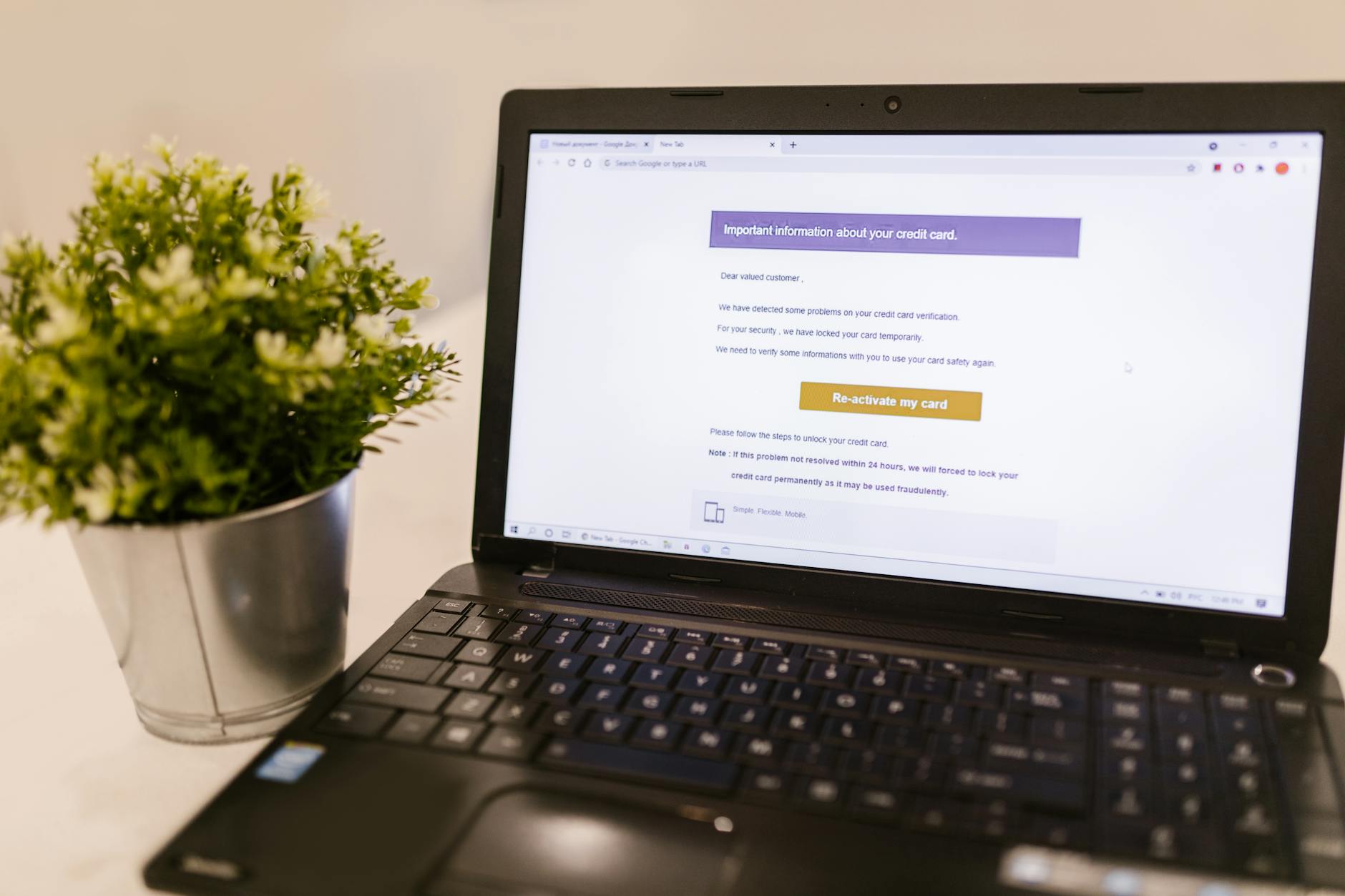
Even well-qualified EP holders undermine their applications with avoidable mistakes. Being aware of these pitfalls can save you time and anxiety.
- Applying too early. Submitting an application after only six months on an EP may technically meet the minimum requirement, but it rarely results in approval. Allow yourself at least two full tax assessment cycles to demonstrate financial stability.
- Inconsistent information across documents. A payslip showing a different salary than what is declared on your IRAS Notice of Assessment, or a birth certificate name that does not exactly match your passport, can cause ICA to suspend processing and request clarifications.
- Neglecting the cover letter. Many EP holders skip the cover letter, missing an opportunity to contextualise their achievements, explain career moves, or highlight community involvement. A strong cover letter acts as a narrative that connects the dots for the assessor.
- Ignoring social integration. An application that is purely transactional—listing only employment and salary data—overlooks an important dimension. ICA explicitly values community participation and local integration. A profile showing no volunteering, no local memberships, and no donations to Singapore-registered charities may appear detached.
- Failing to maintain legal status. Any history of overstaying, working without a valid pass, or violating Singapore’s laws will almost certainly result in rejection. Ensure your EP is valid throughout the application period and that you comply with all regulations.
- Submitting blurry or incomplete scans. Documents that are cropped incorrectly or partially unreadable frustrate verification checks. ICA will request resubmission, which adds weeks to the process.
5. How to Strengthen Your Profile: Practical Tips for EP Holders with 2–3 Years in Singapore
With the basics covered, differentiating your profile from thousands of other applicants requires a deliberate effort over time. The following practical tips for EP holders with 2–3 years of work experience in Singapore focus on social integration and financial records—two levers you can actively optimise.
Optimise Your Financial Records
Your financial footprint is a proxy for economic contribution and stability. Beyond a healthy salary, consider these actions:
- Maintain a consistent savings pattern. Regular deposits into a Singapore bank savings account or fixed deposit over two to three years signal financial discipline.
- Invest through local institutions. Holding a Supplementary Retirement Scheme (SRS) account, contributing to the Central Provident Fund (CPF) voluntary scheme if eligible, or investing in Singapore-listed unit trusts through a local bank demonstrates alignment with the local financial system.
- File tax returns punctually. Not only must you file and pay taxes on time, but any significant gap between your declared income and your EP salary tier should be explainable.
- Avoid excessive overseas remittances. While there is no official guideline against sending money abroad, a pattern of moving the bulk of your salary out of Singapore every month may inadvertently suggest limited economic rootedness.
Build a Record of Social Integration
Social integration is a qualitative factor that ICA weighs seriously. Integration does not mean performing a few token acts in the month before you apply; it means sustained involvement.
- Volunteer with registered charities. Commit to a regular schedule—biweekly or monthly—with an organisation like the National Volunteer & Philanthropy Centre (NVPC) or a grassroots community club. Keep records of your service hours and any certificates of appreciation.
- Join community activities and clubs. Participate in Residents’ Committee events, Community Sports Network activities, or professional associations such as the Singapore Computer Society or industry-specific guilds. Active membership, rather than passive listing, makes a difference.
- Donate to Institutions of a Public Character (IPCs). Small, consistent donations to registered IPCs create a documented charitable trail that an ICA assessor can see.
- Participate in employer-organised CSR initiatives. If your company runs corporate social responsibility programmes, join them and keep internal records or letters of recognition that can be referenced in your cover letter.
- Build local networks. In your cover letter and in any additional notes, you can highlight long-standing relationships, membership in alumni chapters, or participation in local sports leagues. The key is to show that your life in Singapore extends beyond the office.
When your application reflects both strong economic integration and genuine community involvement, you give ICA more reasons to view you as a permanent resident in substance, not just in name.
Frequently Asked Questions
Can I apply for Singapore PR if I have been on an EP for only two years? Yes, two years of continuous employment on an EP is a solid foundation, especially if you have two completed IRAS tax assessments and can show progression in salary or responsibilities. Many successful applicants apply in the two-to-three-year window.
Should I include my spouse and children in the PR application? Including immediate family members is standard and generally viewed positively, as it signals an intention to settle as a family unit. Ensure your spouse and children meet the documentary requirements and that your combined household income comfortably supports the family without reliance on public assistance.
How long does ICA take to process a PR application for EP holders? Processing times generally range from four to six months, but straightforward cases may be decided faster, and complex ones can extend beyond six months. You can check the status through the ICA e-Service.
Will changing jobs during the PR application affect my outcome? A job change after submission can introduce complications, because ICA bases its assessment on the employment details you provided. If the change is unavoidable, update ICA with your new employment letter and payslips through the e-Service as soon as possible. Frequent job moves before applying tend to weaken a profile.
Is a cover letter mandatory for the EP-to-PR application? No, a cover letter is not mandatory. However, a well-crafted letter allows you to tell a cohesive story about your career, your life in Singapore, and your future plans. Many applicants treat it as a key differentiator.
Summary
Transitioning from Employment Pass holder to Singapore Permanent Resident is a structured process that rewards early preparation, consistent financial behaviour, and authentic social integration. This comprehensive step-by-step guide has walked you through eligibility requirements, a complete document checklist, the ICA e-Service submission workflow, common mistakes, and practical tips for EP holders with 2–3 years of work experience. By paying attention to the details—especially your financial records and community involvement—you increase the likelihood of a favourable outcome. As you prepare your application, remember that ICA is not merely processing paperwork but evaluating the depth of your commitment to Singapore.